Wednesday, April 2, 2025

Worldbuild24 - Imaria Geography

Imaria

Geography

Aesheba – A corruption of the original name Hersheba, a debased land of ruins and wrecks. Though seaward facing against the Mountains of the Sun and abutting Stygia. Aesheba relies on seasonal rivers. Ancient colonists repeated the mistake of logging the centuries-old stands of trees which kept the soil in place and bringing war. Since then, Aesheba remains little more than a series of desolate ruins. The creation of the Gnolls was here and the interior is home to the Desert of Desolation and its treasures.[i]

Akota, The Land of - Amid the Weeping Mountains of Imaria lies an obscure Sultanate that profits greatly from its isolation. Akota may have once been part of Zannad, but that is lost to time. It is instead home to waves of invaders from The Three Lands, mostly Meru and Zakharans. The inhabitants raid and trade with the traditionalist Meru, Stygia and into the three lands. They know the secret of the Genies Wind and some count the unenlightened of the Crowded Sea as their relatives. Their premier god is Ompalam and they declare they are master of Eden.

Akpara River – One of the great rivers on Imaria, it flows from the jungle mountains to the Endless Blue. It separates the Night Men from the Kingdom of Lokossa and gives them warning when they attack. In the higher reaches though, local tribes use it as their primary means of sustenance and at the sources stand the ruined cities of the Dawn Age. Long-dead ape men built these with the first carvings before the Yellow Plant Empire swept through. Even now their surviving trees and associated clans thrived without authority in pockets along the banks.[ii]

Arabo – A small and empty city in Lokossa, near the opening of the Akpara River. Once the capital of Nibomay, an empire that preceded blood-soaked modernity. Having sprung from the cleansing of the Kosan, the iron-wielding women of the city carved trade routes and oaths of fealty across the Bloodtangle, the savannah of the Meru and into the Weeping Mountains. The coming of the Night Men ended that order, though the female bodyguards of the Ahonsu harken back to that age.[iii]

Bashar’ka – An anomaly with the land of the Kirsi. A small tribal kingdom which allows queens, ruled by fire-priests and not the Sun Faith. This is due to its unfavourable position beyond the Iteru along the border with old Deshur, where it is too much effort to bring the horses across. Abandoned during The Long War, it has been reoccupied with vigor, as a market center. Founded by a dragonslayer, the people call themselves Xon’mo, or “fire eaters”.[iv]

BIda Rainforest – The great jungles of the Three Lands are divided into Lokossa north of the Akpara River, the realm of the Night Men to the south and in the heart and headwaters is the Bloodtangle. Only those of Nyambe are so tautological, for the way west and north is long silent. The night men are kept at bay from the mountains by furious fighting from the Wakyambi, rumored diminutive Nghoi and the Imbulu. In turn this has allowed the Meru exiles south, thought they cursed the horse-killing trees. Again, in turn, Mabwe and east coast traders can enter with only some fear.[v]

Black Harbor, The – Off the eastern coast of Imaria, where few sail due to the Narrow Passage, is a small tropical island. About equidistance along Kaya Vua Samaki. This place is not too far from where the Islands of the Uttermost South are said to lie. Planar pirates, strange ships and practitioners of the High Trade fill the docks, taverns and flophouses. The weak boundaries even allow a common captain to try and brave the planes in an Earthly ship and correct knowledge.[vi]

Bloodtangle – To cross the Akpara River means death at the hands of the Night Men, but above the lands of Lokossa, the fecund jungle grows wilder and mountainous. There the dubious safety extends to both banks. Trees tower above streams that flood without waning. Hostile, predatory or poisonous life flourishes among aggressive natives. They are those who dared to deny the Kingdoms of the lowlands. Those Wakyambi who dwell among the remnants of the Yellow Plant Empire. And the few Humanoids armies which have been spurred from the Sea of Ships to trek the Primal path beyond prying eyes.[vii]

Boha-Boha – A cautionary tale. In early Antiquity, mighty people turned back the Dragons of Maru-Qet with the Wakyambi. Flushed with victory they undermined the warrior-women of Arabo. For they spread bronze, when Nibomay relied on holy iron. Nibomay swept across Meru, killing all and were in turn attacked by demons from the mountains. Mighty deaths were had and when entering the capital, Chuku, they found warriors impaled as offerings on every crossroad. Then commoners, down to the children. The palace was empty as well. Though some remote boha-boha survived for a time, their bronze was forever.[viii]

Boroko – The name the Sultanate of Akota is known among the Three Lands and Nyambe, see Akota, The Land of.[ix]

Desert of Desolation – Despite the abuses suffered by Aesheba, the edge of the desert remained watered plains and from there the home of great Arkhosia during the later parts of Antiquity. With the destruction of the Arkhosian-Bael Turathi wars though, the land was rendered lifeless with magic and neglect. The only people now are nomads and the missionaries of The Enlightened Faith. This blasted landscape gives way to bone-dry foothills of the Mountains of the Sun. The ancient passes there to Deshur mean many cartographers confuse the two deserts into a single bisected one.[x]

Deshur – The sixth kingdom of the Three Lands, Deshur abutted the Weeping Mountains and so was closer to the overland trade and genealogy with the Stygians. The people of Deshur strove to uphold their ancient and forgotten traditions until war with Nyala drove the Pharoah to reopen the lore forgotten from Zannad. This transformed the willing people into Eternals, a form of undead that must consume warm Demi-Human flesh to maintain their almost-living forms. After 190 years of war, they were defeated at their capital, Deshuret and remain shadowy threats. The area is known beyond as the Desert of Desolation.[xi]

Dogar Plateau – At the edge of Nyambe, where the Entare roam, is an enormous mass of rock. Unnatural springs rise to the flat top large enough for the city to have been built. Stairs and ladders are the only way from below and keep the small city of scholars and exiles safe. Such a place was raised by unknown forces and arcane means. With the sigils of Dogar, great spirit of laziness and greed are chiseled into the rock. Some Planar travelers come here, but the city is felt by many to be a trap or enticement of some kind.[xii]

Gomala, Lake – A strange lake that marks the edge of Sokone patrols. Mysterious, every few hundred years, all living creatures within five miles suddenly perish. It is said to be the result of the spirit of the lake. A lion who guards a magic egg and attacks when someone discovers its lair. Few believe that even mighty holy and magical people could be overcome by a single spirit. But still, such an egg would be very valuable if it was true.[xiii]

Igwe – The seaward entrance to The Three Lands where foreign merchants from Zakhara, Adventia and the world-servicing Elven Merchant Fleets trade for goods bought to Sokone. This is as far as most foreigners see and it is a whirlwind of color, smells, and sound. Many factors who are not local clans are from the Adretia. Ill-tidings, as the ambitions of The Iron Circle seek to extend to the slave markets of Turu, capital of Lokossa, Igwe would make for a fine resupply port.[xiv] 

Iteru – The mighty river which defines the Three Lands. Named by Deshur, the river is actually named after the river network in nearby Stygia, but that name has since shifted. The river is the main artery of trade, with the surviving kingdoms coming to its banks to exchange with the canny Sokone people. This has been made much harder since the war destroyed many towns and villages along it. Even the great capital now lies empty as The Silent City. The Elven Merchant Fleets tend to stop at the estuary and rely on factors to arrange for cargo to meet them.[xv]

Kaya Vua Samaki – The name means fish-catching towns, but the Elven Merchant Fleets reports many city-states, grown quickly and richly on trade with Akota and the interior. The fleets rarely sailed in that direction, with the Narrow Passage eliminating the need to circle Imaria. The Zakahran merchants thereby dominate trade and can reach into the previously difficult interior. It is unknown how the Land of Akota responses. It is also reported to be a source of rare medicine for the lands of eastern Nangia.[xvi]

Kirsi – The best horsemen in the Three Lands, the Kirsi were threatened and tempted into swearing oaths of loyalty to ancient Nyala. Militaristic and quarrelsome, they fought the Deshurites first to preserve their hilly borderlands and eventually for their very lives, since Nyala could never fully commit to the Long War. Eventually they renounced their oaths and fought the Nyalans too, allowing the undead to creep over. Emperor Kaday treated them equally and routed Deshur. Allowing them to return to a state of constant clan raiding, glory-seeking, and increasing convergence to the Sun Faith brought from Meru.[xvii]

Lokossa – The green lands are called colorful, fever-hot and life there is cruel. Lokossa is ruled by bloodlines of sorcerer nobility and the greatest is the Ahonsu. Likewise, even foreign magic-users are treated with respect. Long pressed by the Night Men across the southern Akpara River and the hostile jungle itself, Lokossa makes great use of slave labor, and human sacrifice at calendar times to fuel its magic. This draws fear and scorn, but they believe themselves to be the shield of The Three Lands. Life is correspondingly autocratic; commoners serve nobles who serve the state. Few live to sixty years.[xviii]

Mabwe - The most southern of the kingdoms of the Earth. It dwells where the Weeping Mountains end, a center of copper, gold and ivory. Supplying the cities of Kaya Vua Samaki and even distant Akota. No doubt many of its treasures end up in Igwe or Stygia for it is the richest in Nyambe. Said to have a mighty palace to keep out its many enemies. Otherwise, friends of the Wakyambi.[xix]

Maru-Qet – A land shrunk and left out of time. So that even serpent-haunted Stygia is but it’s common child with Zannad. When the Desert of Desolation was green, there arose the first empire of Dragons. They say they clutched the world for a thousand centuries. Humanoids served dragonspawn, in turn chromatics and the brown dragons of the Qetian Dynasty in the name of Tiamat. Nefermandias the forsaken pharaoh overreach though and the prehistoric monuments, fertile valley and savannah were blasted into sand, bringing forth the desert. Stygia grew from those who served it and chose a different God.[xx]

Maru-Qet, The Tombs of – Nefermandias the forsaken pharaoh of Maru-Qet and all his family dwell in their own tombs. As so they may live in the same comforts in life and death. With the fall of their empire and the growth of snake-worshiping Stygia, their tombs are now little more than lairs within militarised temples from which they may extract tribute from those upstart civilisations. Urum-Shar, his surviving daughter is particularly infamous for she lavished all her excess on her own tomb and gathers more incessantly. Such temple-complexes ironically became the centres of resistance to throw of the last Zakharan conquest.[xxi]

Meru – During the Long War with Deshur in The Three Lands of Imaria, bands of rebels and refugees fled the undead kingdom to the savannahs. There they interbred with the native inhabitants and proved instrumental in the destruction of eternal Deshur. But now the city-clans of Meru have no enemy and not enough water or pastures for the people. Those who refused to intermingle lived as bandits or rode beyond the Weeping Mountains to find new lands. Raids are becoming feuds and two of the clans push west into Sokone and Lokossa.[xxii]

Mountains of the Sun – The sweeping range which separates The Three Lands from the Desert of Desolation. Virtually none can cross the tops as a race of nearly gone, bitter Giants hold sway. Only the height of Ogres, these giants claim to have been handcrafted by the spirits in the Dawn Age, the templates for Humans. Master craftsmen and possessing fiery hair and polished skin, these brooding immortals lurk in their excessive, trap-filled palaces with their subservient retinues when once they taught secrets. They cannot breed among themselves but can with humans.[xxiii]

Nyala – Past glories mark tall and artistic Nyala, now a realm of bitter nobles squabbling over the scraps. The Mais of old Nyala long struggled against Giant raids from the Mountains of the Sun, only ending when the first emperor, Mai Mansay forged the first legions and convinced the giant king Musa to make pacts. Though the giants ended them a hundred years later, the next four hundred marked an empire that covered Krisi and Sokone. Nyala fought the eternals with only one hand, dealing with rebelling nobles until Emperor Kaday gave it all and his title for victory.[xxiv]

Nyambe-tanda – The term means Land of the Overpower in the related togues of the ancient Meru and Lokossa. It or the shortened form of Nyambe could be seen as an alternative name for Imaria, except that it holds little sway in the Three Lands. It is used more beyond the Weeping Mountains by meru conquerors trying to stamp out the wild animists of the horse-killing south.[xxv]

Paraku – A Lokossan city where the jungle fades into the golden savannah of Meru. Recently rent with civil strife as generations long ethnic tensions boil over. The Nebeti, a pure Deshurite people who migrated here in service to their undead masters, live in their own impoverished quarter but increasingly have fallen under the command of a crime lord, causing great ill-will. The animist head priest plots against them and the Meruan Sun Faith gathering strength. The Oba will do nothing until peace is restored and then enact his own scheme. And the tomb-palace of horrors remains beyond the walls.[xxvi]

Silent City, The – Once the last settlement of Zannad in the Three Lands, it’s Yuan-ti inhabitants, called Umthalu were slain by the first Sokone as they pushed up the Iteru River to the desert. Retaining only the city-name Chakari. Now their capital, it was overrun by the undead forces of Deshur during the Long War and made their capital in turn. Hideous things occurred there by the flesh-hungry Eternals and the coalition under Emperor Kaday razed it and left it abandoned. Now it is a ruin, inhabited by unquiet ghosts, terrifying monsters and the ever-hungry undead that could not be first found.[xxvii]

Stygia – Also known as Nehekhara or Djelibeybi, Stygia is a land which has exerted much effort in remaining the same as it did from Antiquity, when it arose out of the influence of Zannad. Though invaded by Midani from Zakhara several times. The ancient curses and mysticism of the Gods has kept Styiga independent after varying lengths of cultural diffusion. It is here the Enlightened Faith of Zakhara filtered through to become the Sun Faith of the Three Lands. The dead do not take kindly to robbers here, no matter how lucrative the pyramids and tombs could be.[xxviii]

Sokone – Along the mighty Iteru are the people chased from expanding Nyala and hunted by Lokossa as slaves. In the swamps and lowlands, they formed a bond in suffering and resistance. Outsiders were a greater threat and too much effort was spent quarrelling over patches of farms when they could be settled by negotiation and trade. The conquest of The Silent City pushed them into Nyala’s embrace for a time, but the merchant-princes of the cosmopolitan river continue to thrive. Spreading their wealth down the web of social obligations and debts. The Elven Merchant Fleets and outsiders deal with them first.[xxix]

Taumau-Boha – Once the core lands of the Boha-Boha people, in the dry lands beneath the Three Lands and against the stumps of the Weeping Mountains. Long isolated by the ravages of the Night Men, it has recolonised by a fair-Meru related people. It is not known if they still live there, or if the Humanoids have driven them back to Mabwe.[xxx]

Three Lands, The - The center of Imaria, this region holds most of the indigenous civilizations and trade. The first land is the green land of the old kings; the coastal, rain-receiving portions of the Mountains of the Sun in Nyala, the great Iteru river of Sokone and the hot jungles of Lokossa. The Yellow land is the savannah where the Meru people dwell, the thrice-accused Silent City along the Iteru and the dry foothills where the Kirsi ride. Last is the dreaded black deserts of Deshur. There were once twice as many cities before the Long War.[xxxi]

Tyrath – Once a great city in Stygia, built in honor of Ioun and Erathis. The city was most famous for its library, which contained many magical texts. Unfortunately, it drew the attention of the Circle of the Dark Wing, a Druidic Circle who pledged to hunt the blasphemy of undeath. For the priests of Ioun had taken in several text from the legendary city of Moil. So, the Circle burned down the library. Without it, it was a mere port, fit only for grain and looted treasures.[xxxii]

Vumerion, Black Tower of – Before the forces of the Raven Queen could level the den of necromancy, terrible horrors spilled from the tower. One was the semi-corporal undead known as Nighthaunts and the corpse-weed that makes them. Corpse-weed gives strength and joy at the cost of foul nightmares. Spreading through the Shadowfell and the Earth, any consummation is said to transform the person upon death as their soul is interrupted across the Shadowfell with hunger. Nighthaunts suck the life from the young in preference. Later spreading the corpse-grass curse to other vegetation when full.[xxxiii]

Weeping Mountains – Great peaks, enclosing the black sand of Deshur stretch down the coast of Imaria. This canyon-scared landscape holds ruins; some of Zannad, some of Stygia and deserted outposts of a dozen civilizations. It was here ancient Io was split in twain during the Dawn War and Bahamut and Tiamat were born, hence it may be the genesis of the Dragonborn as well as forgotten humanity. Its most important features are the southern passes, which has admitted invaders and explorers and Meru conquerors out into the animist south.[xxxiv]

Zahnshahan – The slithering city. A Yuan-ti city-state in the bIda Rainforest. One of the few places in the world where they rule openly as they did in the ancient days of Zannad. It is careful to keep up appearances of alliances and friendliness with Lokossa and any trader who comes up the Akpara River. But many suspect their hidden hand in many plots and occurrences, aimed to destabilise other regions and seize control.[xxxv]


[i] The name Aesheba was from an obscure and not very good setting supplement by Frank Mentzer and associates. Hersheba is a pun-named nation from Discworld.

[ii] Frequently referenced in Spears of the Dawn

[iii] See Nyambe African Adventures p.19

[iv] Adapted from Nymabe African Adventures p.20, 142

[v] See Nyambe African Adventures p.134

[vi] See Revenge of the Giant p.78

[vii] See Primal Power p.130

[viii] See Nyambe African Adventures p.20

[ix] Adapting Nyambe African Adventures, pp.142-143

[x] From the AD&D series I1-I3 and the mention in the Dragon Articles about the Points of Light setting.

[xi] See Spears of the Dawn pp.67-69

[xii] See Nyambe African Adventures p.127

[xiii] See Nymabe African Adventures p.137, based on several real-life lakes

[xiv] See Spears of the Dawn

[xv] Summarized from several different text elements in Spears of the Dawn. This is the Ancient Egyptian word for the Nile, which is difficult because it serves as the stand-in for the Gambia/Senegal/Volta River.

[xvi] See Nyambe African Adventures p.22, 144-145

[xvii] See Spears of the Dawn pp.82-83

[xviii] See Spears of the Dawn pp.84-85

[xix] See Nyambe African Adventures pp.21-22, pp.145-146

[xx] See Draconomicon: Chromatic Dragons pp.240-241

[xxi] See Draconomicon: Chromatic Dragons pp.142-149

[xxii] See Spears of the Dawn pp.86-87

[xxiii] See Spears of the Dawn pp.128-129

[xxiv] See Spears of the Dawn pp.88-89

[xxv] See Nyambe African Adventures pp.5-6

[xxvi] See Spears of the Dawn, The House of Bone and Amber

[xxvii] Summarized from several different texts within Spars of the Dawn

[xxviii] It’s Egypt, but with the Pathfinder 1E Golarion twist about Osirion becoming independent from Kelesh/Qadira.

[xxix] See Spears of the Dawn pp.90-91

[xxx] Adapted from Nyambe African Adventures

[xxxi] See Spears of the Dawn

[xxxii] Inspired by the textbox in Primal Power p.92, clearly based on the Library of Alexandria

[xxxiii] See Open Grave p.171

[xxxiv] See Spears of the Dawn

[xxxv] See Monster Vault p.289

Thursday, March 27, 2025

Mutant Violence


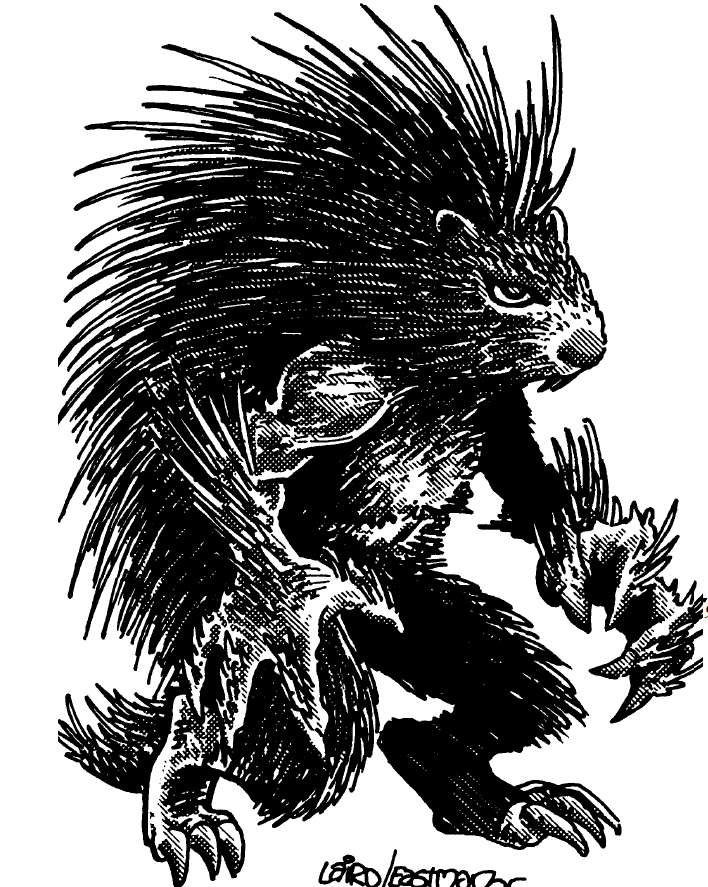
(Eastman and Laird for TMNT&OS)

Someone once told me that while the action in MitN was good, the character creation was slow.

And I reflected on how TMNT&OS was also a bit of a pain to make characters, and neither really fitted a vision of fast mutant action.

So I tried mixing TMNT&OS with Luke Gearing's Violence to make it a bit more speedy. It ended up being Violence with mutants, rather than Violence attached to TMNT&OS, but I sort of like it.


https://lukegearing.blot.im/violence#ref-1L37


Mutant Violence

A mutant has four points split between Animal/Man.

Every point on Man is a Competencies and every point on Animal is a Trait from the species entry in TMNT&OS. Every point of Animal is -1 to DV for social interactions with humans.

The five mutant shapes are also reflected by the five possible states of mutant. So, no Human Features needed and not BIO-E either.

Extra Attacks from Species Traits is Advantage.


(One more stage than TMNT&OS depicted)

Now for something contradictory to Violence.

Major Characters have 4 Plot Points which can reverse a Downed state. Named NPCs have 2 and likewise have only 2 points to split between Animal/Man.

Optional Melee Table

Martial Arts for a mutant-style game increases Fist bonus by 1 as if a shield. Natural Weapons simulated by damage; D4 = Dagger, D6 = short sword etc, but count as Fists for Weapon vs.


A random roll got me Alpha the Killer Hamster

Trained by the military to kill, he escaped with $100,000 of 1980s money in weapons and equipment. His flight or fight response is all outta flight.

Rating 2/2 Plot 4 Social Penalty -2

Trait – Claws

Trait – Digging

Competency – Driving

Competency - Squad Automatic Weapon

Melee +4, +2 From Claws +2 Training

M60 machine gun

Garish Van


Modified Melee Procedure. Trained (3) Claws attack as Short Sword and defend as Fist

Mutants After the Bomb

I was thinking about I've been posting a bit about Mutants in the Now and trying to understand why it doesn't always click for me. A big part of it was it was a detailed building minigame before the tactical game. A legacy of trying to streamline and make workk Palldium's scattershot approach to D&D-derived game design. Not that Eric Wujick couldn't design games, he was probally the best at Palladium.

While both games are crunchy and I appreciate MitN splitting off the tedium of statting each foe as if they were a player character. MitN just lacks that sort of old school spontaneity, of randomly rolling a weird character and choosing three or four animal and human traits becuase your options were limited and on the sheet. Of a distingive image oppossum with a machinegun .Imagining that weird thing spraying bullets and rolling a fistfull of dice as damage. MitN is very methodical and probally a game less likely to just snap in half or end up a dead end.

Unless one plays a giant cockroach with the Pursuit Predator style, that was busted.


Eastman and Laird's drawing of a mutant opposeum they made for the game.


There just doesn't seem to be much distinctiveness between foes. A few animal traits, a martial arts style and some cinematic powers are just attached to a featureless block when players characters are heavily defined by their choice of species and origin through the "discounts" that come from that. In the form of natural and favourable abilities, skills and styles.

The text in it's replica printing press font can make it a bit hard to read dense text too. It blurs sometimes, which isn't good when finding one rule among many.

But it's still pretty good as a basis. Which let me tinker around with trying to reinvent the classic TMNT&OS setting, After the Bomb. Later the sole setting when the license for TMNT lapsed.

Game idea

(map from Gamm World 2E, 44km scale hexes)

It's been 20 years After the Bomb. The ruins and surrounds of Vegaz are home to about 5000 people, 4500 of them mutants. While they are theoretically divided into 4 great tribes, in practice they are split into gangs of 3 to 12. These gangs are called upon for various tasks, particularly in scouting, trading with distant cities/societies or fending off various semi-mutant wildlife and Cryptic Alliances which wish to twist the wastes in their own image.

Why are there mutants?

GOO-P can change and regenerate tissue to an enormous extent, it was the medicine of last resort used in burn and anti-radiation treatments. It's believed that it was also in the weapons used in the Bomb as Poison-Storms swept the lands, mutating creatures. Children of Zandig are zoo and farm animals, sprayed down with GOO-P as a safety precaution during the Bomb or picked up on the trek east. The Wild Bunch are native species of the Mojave Desert and Kalifornya. The New Scum were those feral animals and urban pests already living in Vegaz and the Dammed are those human and nearly human engineers who keep the Hoover Dam running.

In my idea, the GOO-P was tested in sterile conditions and so there was no different species DNA to mix together, so it either caused massive health collapse or regenerated all damaged tissue.

That and Proteus lied about their accidental mutations of lab animals.

What's the problems?

Inter-gang squabbles are constant in the ruins, the human engineers who live at Hoover Dam need new parts and hostile wildlife/semi-feral mutants are always a concern. As mutants age, the question of children and their forms take prominence. And with all the gasoline having run out, expeditions go by muscle and hard to gather ethanol. The world of the Vegaz people has shrunk down to the valley and they are isolated.


Random Wild Mutant Concept, Monsters and NPCs only

1) Animal-Intelligence, No obvious mutations, might not be mutated at all

2) Animal-Intelligence, Refund Half GOO-P and purchase Wild Mutations

3) Animal-Intelligence, Refund Half GOO-P and purchase Psionic Powers

4) Animal-Intelligence, Refund Half GOO-P and purchase SR

5) Animal-Intelligence, Refund Half GOO-P and purchase 1 Wild Mutation, 1 Psionic Powers and the rest on SR

6) Above Animal-Intelligence, Refund Half GOO-P and purchase Human features

7) Above Animal-Intelligence, Purchase no Human features

8) Above Animal-Intelligence, Refund Half GOO-P and purchase equal amounts of Human features and Psionic Powers

9) Above Animal-Intelligence, Refund Half GOO-P and purchase equal amounts of Human features and Wild Mutations

10) Above Animal-Intelligence, Refund all GOO-P, purchase Human features to maximum and then buy species traits

Wednesday, March 26, 2025

New Species for FFG Star Wars

All these species were made with a 130 XP base and somewhat toned down to fit the FFG ethos in how species should be balanced. Since I am not very imaginative, this mostly comes down to Setback and Boost dice.

The nominal setting for all these species is a backwater part of the Mid-Rim called the Charnel Sectors by the locals and unofficially the Inner Sector and the Outer Sector by the Imperials. The official names is too boring and unused to be mentioned. The Outer Sector forms a thick crescent around half of the blob of the Inner Sector and both have a level of civilisation and violence more associated with Outer-Rim dives. No trade route goes through the sectors and the Imperial garrison settles for just extracting taxes and playing the locals against each other, which is easy to do. Moff Mon doesn’t even live in the sector but spends his time with his paramount, the Moff of the next sector over. The Inner Sector is home to numerous bombed-out or ecologically damaged worlds and is home to the species stolen from SLA Industries. The Outer Sector is a bit more liveable and home to the species from Mass Effect. Some other species were scattered around wherever I wanted them to be.

I tried to include altered background for each race but it wasn’t any good. In truth, each one of these has been redited to be more in line with the one or two trait ethos I mentioned in my last FFG species post.


Asari

Presence 3 Brawn 1

WT 9 ST 11

1 Rank in Charm

Starting XP 105

Empath: The species removes 2 setback dice from all social skill checks they make. When an Asari uses the Coercion skill to inflict strain on a target, they suffer strain equal to half the amount they inflict.


(I like this original concept art more)

Batarian

Cunning 3 Presence 1

WT10 ST10

1 Rank in Coercion

Starting XP 100

Distracting eyes: Batarians add one setback to any Charm, Deception or Negotiation check targeting them, unless that check is made by another Batarian. Once per session, they may choose to upgrade that skill check instead.


Drell

Willpower 3 Presence 1

WT 10 ST 10

1 Rank in Perception

Starting XP 100

Memnii: Drell possess eidetic memories and often imprint significant events in their life as unfading memories. Once per game session, a Drell may form a new memnis that encompasses one scene or encounter. At any time, a Drell may perfectly recall any memnis that has been formed or witnessed, or share it with another Drell or a Force-sensitive character. 5

Desert Dwellers: Drell may remove 1 setback die from penalties imposed by hot or dry environments. They add 1 setback die to checks made in high humidity environments


(Fanart)


(Frankly any of the concept art works)

Elcor

Brawn 3 Agility 1

WT 14 ST 9

1 Rank in Cool

Starting XP 90

High-Gravity Adaption: Stemming from a planet with 4g of surface gravity, elcor may remove two setback dice imposed by high-gravity environments.

Emotional Statement: Elcor have such flat affect in their voices that they preface statements with the emotion behind it; this makes them very poor at deception. Any roll such as Deception that requires the Elcor to be vocally deceptive, upgrade the difficulty by 1.


Hanar

Brawn 1 Willpower 3

WT 8 ST 11

1 Rank in Deception

Starting XP 90

Hover: Hanar start with a custom-Hover harness that lets them move out of water. When hovering, Hanar do not have to spend extra manoeuvres navigating difficult terrain, but otherwise function as a normal walking character.

Amphibious: Hanar can breathe underwater without penalty and never suffer movement penalties for traveling through water.

Stranded: While not submerged in water, a Hanar adds one setback to all Brawn-based checks.

Native Hanar

Not integrated into non-aquatic society, the Hover trait is replaced with the following:

Natural Poison: When making a Brawl check, a Hanar can spend 3 advantage to inflict the Immobilized condition onto the target.

Tentacles: A Hanar's Brawl and Melee attack gain the Ensnare 1 item quality.


Krogan

3 Brawn 1 Cunning

WT 12 ST 8

1 Rank in Resilience or Survival

Starting XP 90

Redundant Body Systems: Decrease the difficulty to heal any Critical Injuries a Krogan is suffering from by one (Hard becomes Average, Average becomes Easy, and so on)

Body Plates: Gain 1 Rank of the Durable Talent


Protheans

Willpower 3 Presence 1

WT 10 ST 11

1 Rank in Vigilance

XP 100

Feeling the Echoes: If a Prothean makes physical contact with another living being, they can spend 2 Strain to gain 1 Boost for the next skill roll involving the target.

I decided that the Protheans in a Star Wars context would have been around with the Zeffo and the Rakata. The previous galactic age of Force-sensetive empires.


(Choose your favourite face)

Quarian

Intellect 3 Willpower 1

WT 10 ST 10

1 Rank in Mechanics

Starting XP 100

Compromised Immunity: Quarians possess a weakened immune system and thusly have to wear environment suits in order to avoid potential life threatening illness. A Quarian that does not have, or has a punctured enviro-suit, reduces their WT and ST by 1.

Solid Repairs: The character repairs +1 hull trauma per rank of Solid Repairs whenever he repairs a starship or vehicle.

Starting Gear: Quarians begin the game with a custom enviro-suit, which counts as ‘Vacuum Sealed heavy clothing’. This requires no hardpoint and in standard atmosphere has no operation time limit. This attachment cannot be removed. If the character acquires no armor or clothing at the start of the game, they still start with the same narrative effects of that attachment.


Salarian

Brawn 1 Intellect 3

WT 9 ST 11

1 Rank in any Knowledge skill

Starting XP 100

Fast Metabolism: Members of the species recover twice as fast from the effects of poisons and toxins as humans. They also require a huge amount of sustenance (food, fuel, etc.) each day; if they are unable to meet this requirement, they become disoriented until they can satiate themselves. When attempting to recover from Critical Injuries they add 1 Boost to Resilience checks they make.

Tireless: The species does not sleep or require similar periods of downtime. This is largely narrative, but it also means that the species does not add setback dice to checks or suffer other consequences of going for extended periods without rest.

Low-Light Vision: Salarians gain 1 Boost die to see in darkness.


Turian

WT 10 ST 11

1 Rank in Discipline

Starting XP 95

Reflective Carapace: Turians have an evolved resistance to radiation, granting them 1 Boost Die to Resilience checks made to resist the effects of radiation.

Talons: When a Turian makes Brawl check to deal damage to an opponent, he deals +1 damage and has a critical rating of 3.

Expatriate Turian

Some Turian who grow up outside the harsh radiation of their home world do not develop a thick metallic carapace, remove the trait; Reflective Carapace and add 5 XP.


Volus

Cunning 3 Willpower 1

WT 11 ST 10

1 Rank of Negotiation

Starting Experience: 90 XP

Ammonia Breathers: Volus evolved to breathe in an ammonia-rich atmosphere, and traditional nitrogen-oxygen mixes are poisonous to them. Volus start the game with an ammonia respirator, and treat oxygen as a dangerous atmosphere with Rating 8.

Environmental Adaption: Volus may remove 2 setback dice imposed by high gravity environments.


Vorcha

Agility 3 Presence 1

WT 12 ST 9

1 Rank in Survival

Starting XP 90

Regeneration: Whenever a Vorcha would recover one or more wounds from natural rest of recuperation, he recovers one additional wound. He does not recover one additional wound when receiving first aid or medical treatment from another character, or when using a medpack. Vorcha can regrow lost limbs as well, though it usually takes at least a month before the limb is usable.

Rapid Adaption: When exposed to an adverse environment, Vorcha may suffer 2 strain to remove setback dice imposed by that environment. In doing so, they lose any previous benefit gained by this feature.

Fearsome: Vorcha add 1 setback to Charm, Leadership, and Negotiation checks they make, but they add 1 boost die to Coercion checks they make. This does not apply when interacting with other Vorcha.

(Bsically Trandoshan plus extras)


Yahg

Brawn 3 Willpower 1

WT 12 ST 9

1 rank in Perception

Starting XP 90

Rapid Learning: When rolling an untrained skill, Yahg may suffer 2 strain to remove setback dice imposed by that skill. In doing so, they lose any previous benefit gained by this feature.


Miscellaneous Grab Bag

This was going to be a musing on how the conversion of Cyberpunk 2020 to Vampires the Masquerade from White Wolf Magazine didn’t work. But I have misplaced the notes I wrote at least a year ago about the issue. So here’s the short version:


Vampire the Masquerade like all Old World of Darkness games has modifiers to the roll and modifiers to the target number. And somethings adding and subtracting whole dice. These all do weird things to the percentage chance to succeed and when they adapted Cyberpunk 2020. There was no consistency to work backwards from in how modifiers were adapted.

I still haven’t figured out how to convert old school Shadowrun magic into a Cyberpunk-appropriate form.

 Now I need more content, so here is a grab bag of recent ideas.


Someone once said ACKS/II doesn’t address the pain points of actual using all the merchant, castle construction and hireling rules. Otherwise being nigh the same as OSE or B/X but with more rolling for things that rarely come up. So, I whipped a quick cost idea for B/X and OSE.

If you want to buy/hire something that might not be assumed. Roll 1d6 for a small settlement, 2 for a medium and 3 for a large. Take the highest number.

1-2 Not this week

3-4 Half the amount or twice the cost

5-6 sure

Selling things, do the same rolling process. The profit is whatever margin you as the DM cares to make it. They'll stop buying when you've sold a number of goods/bundles/standardised measurements equal to the roll.

1-2 Half the listed profit

3-4 Normal listed profit

5-6 Half the listed profit again


Having problems integrating Dolmenwood into a wider Old Schools Essentials map/Basic-Expert map. Simply because it's a river flowing north to south, not something many rivers in the real world Celtic regions do. It’s throwing off my internal geography, though I did think for a moment to place it as a sort of Rhone River, but Brythonic Celtic and Gaulish Celtic were quite different things. I did see a good interpretation of it on a fantasy version of Ireland. But that still required some replumbing of the geography.


Some more fictional mutant species. Though portrayed as turtle-like originally, the Cha’thrang has a shell growth and fusing wholly unlike any turtle. Being layered alkaline layers and anchored, rather than part of the skeleton. Carnivores are still so much easier to make mutants. As the system is by a chain of adaptions, based on D&D.


Unknown

Brown Chathrang

SR 11 Enhance DET PRE END

GOO-P: +20

Basic: Otherworldly (Athas), Carnivore, Quadrupedal

Major: Defensive Posture (5), Shell (15), Stable (5), Toxin (10) (Alkaline, treat as Lead-Acid +2) (Roping +10)

Minor: Beak (Hooked) Camouflage (Desert), Claws: Digging, Communal, Heat Tolerance, Infrasonic Hearing, Specialised Predator (Flying Animals)

Never Let Up: (Shell +1): Add +END to Reposition Manoeuvres made against targets with inflicted Statuses


Unknown

Green Chathrang

SR 10 Enhance AFF PRE END

GOO-P: +25

Basic: Otherworldly (Athas), Carnivore, Quadrupedal

Major: Defensive Posture (5), Shell (15), Spines (15) (Darts +3), Stable (5), Toxin (10) (Alkaline, treat as Lead-Acid +2) (Roping +10)

Minor: Camouflage (Desert), Claws: Digging, Communal, Heat Tolerance, Infrasonic Hearing, Specialised Predator (Flying Animals), Teeth (Slaying)

FLAK Battery (Spine: Darts +1): When making a Range: Strike attack, add +1 up to AFF per additional ally making a Ranged Strike this round.

Saturday, March 15, 2025

40K System – Vito

Paranoid religious capital

Vito is the system, and Vito Secundus is the planet, second rock from the orange star. A Shrine World, Vito Secundus has the distinction of being crowned the de facto head of the subsector.

Some 2000 years ago, the sector core was wracked by a heresy which proclaimed the time was right for the Emperor’s return. Imperial authority should be devolved to divinely inspired and fundamentally local Judges. Governors and minor Bishops on developed worlds who felt the best was being siphoned off. The subsector was too new to run out of growth and the two millennia old Civilized World of Vito Secundus was the origin of Bishop Nefarius Porpus, who resolutely preached against heresy in the halls of the Ecclesiarchy.

When the time came for a crusade, after pleading from a much-boycotted synod. The martyred bishop was elevated to a saint and Vito Secundus was diverted from it’s future as a Hive World. Since then, many of its citizens have developed the dogma and the ecstasies to become valued members of the Adeptus Ministorum or even minor saints themselves.

Since then, Vito has amounted to a lead weight on the subsector. More imports than a civilized world, with its greater population of 15,000,000,000. Especially office supplies and constant physical reports on the moral health of the sub-sector. It throngs with pilgrims and as such its economy remains local and insular.

Since the advent of WAAGH!! Gadzmax, the Archbishoip has become fearful of external threats. The chaos wrecked in the sub-sector threatens to teether it over the edge. The venal other worlds lack moral fortitude. Belonging to some other lesser sect or consumed by their own issues. The wider sector is still reeling from the orks’ path and the Archbishop is privy to reports from across the galaxy. The sheer scale of the problems is clear and has given rise to nihilism, to let the rot wither away and a new dawn come.

So, Vito stockpiles, filling vast caverns with machine parts, foodstuffs and promethium. It promises sheltered harbors for Charterist Captains, threatened by increasingly irritated demands from other systems to stop the outflow.

This paranoia is starting to seep downwards as admonishments to the flock to observe for deviances, especially among the pilgrims who come from unknown worlds, bathed in unknown lights. Setting up increasing dissatisfaction with the priests of those pilgrim communities which have settled.

Pilgrim neighborhoods or whole cities have always been a sore spot, since popular imagination assumes pilgrims will leave eventually, even though it takes several decades to cycle to and from.

Though increasing self-isolated, Vito does possess a rudimentary extraction economy. The Belters have been neglected for some 2500 years and the tribes trade among themselves or to the planet. Vito is self-sufficient in promethium, with the Tech-Priests operating refineries around Vito-Aqua, the last planet and gas giant. Vito even used to export promethium until the arrival of the orks on Ajax. The resumption of which is a key concern for the other planets.

The local variation of the Four Holy Ministries sect holds the conditions on Vito-Aqua to be a physical embodiment of hell itself, or at least an understanding of the punishing parts of the Warp. Convicts are sent there to be transformed into servitors and much fear is ascribed to it. The conditions are hellish but no more than normal for the galaxy. The Tech-Priests complain they are being demonized or associated with evil iconography.

In order to bolster the system against both internal and external threats, the Archbishop has invited the space marine chapter, The Fire Unicorns to rebase to airless and molten Vito Primus. The Fire Unicorns are normally based on the former Mining World Ajax and many long to recapture their home world. Furthermore, the Fire Unicorns are an Iron Hand successor chapter and do not mesh with the Imperial Cult. The Archbishop has promised they can recruit from among the Belters. The Belters have not been informed.

Inspired by the crusade which cleansed the wider sector, Vito Secundus has long cultivated its own holy warriors. But given the distance to ship girls off to the sector core where the orders reside, it has turned to the fringe. Rapturous eunuch cults are long prospered, seeking their “future martyrdom” as Saint Porpus achieved in full. Though remaining functional and influential within the bureaucracy. Mindful of an adverse sector synod that eunuchs under arms are still men. Female hustreks possess the same loophole and are assumed to be even more devoted to the Ecclesiarchy and the Archbishop than Sisters must be.

While there are bands of eunuch warriors, they must remain outside the structure and so naturally form their own semi-sanctioned militias with their own authority. Leading to occasional clashes when local priests and organisations become intertwined with their radical influence.

Making Mothership Maps

Mothership is fundamentally a work of Anti-Canon. That is there is no fixed setting except for what is in the text for any given product and it is up to the Warden to chain it together into their own setting. However, enough products link back on each other to create a semi-canon. Mostly referencing off the official modules produced by Tuesday Knight Games.

To make a map from this requires two ways, one more in depth than the other. The first step is a close reading of the module to find out what assumption it makes; what other planets or background elements are referred to and how it implies they fit together (i.e. is something portrayed as isolated or distant). Beyond that, is when you dig through the author(s) blog(s) or Discord comments and see what else they have created or even one-off comments about some home game that might link two published modules together.

Easiest is when the author adds their own map. Then it becomes a matter of sticking it somewhere or sticking modules around it. Like any analytical study, this separates into lumpers and splitters.

Lumpers assume that with the vast scale between planetary systems and sectors, many modules can occur within the same system, hidden among the rings of gas giants and asteroids. The most prime, if not Mothership example being Columbia Game’s High Colonies. Splitters have modules and scenarios scattered in their own systems, potentially up to one for each.

A common way of lumping things together is to do it by author. If all of Tuesday Knight Games modules are about exploring a small section of space, then each author could be exploring their own. If there are multiple authors though, that’s a great excuse for a link, or you just have to make a choice between separating them out.

Blogs can be tricky. A reference might be to a home game, changed for release or discarded as a thought. Or their own changes not reflected in the modules but put in themselves and if you just blindly copy, then your connections won’t make sense. You are doing the equivalent of rehashing twice.


Let’s look at a few of my worked examples

This one was made by cramming modules whenever I felt like they should fit, including non-Mothership ones and eventually by the method listed above. It’s a total mess of distances and regions, the only consistent thing is trying to keep four systems per cluster, like in the sample ones from the Warden operations Manual. But even then, that is listed as just an average. I won't even try and list all the systema dn modules, the map has been on hold until more infomation about a critical area droips via Kickstarter. And at least one has gone dark.


Now let's see a simpler map, made by a closer reading of some actually published modules and a in-depth reading of the blogs of the authors.


This is a composite of several maps. Dug up from the Mothership Discord is a few old maps from Sean McCoy, one of the creators of Mothership, which formed the basis for the published modules. The author Mysteryspice, then took a few references from TKG's Dissident Whispers and built another area with new published modules, called Kappa Tauri. That was pulled from both Discord and blog.

Anodyne is another 3rd party publishing group, which pulled seevral non-associated 3rd party modules into a single cohesive map calle the Third Sector. While it doesn't innately link to their own Inferno Trilogy, the option is left to the Warden. Hull Breach by the same connects by the simple fact that I asked if it did and got a possible location.

On a side note, I normally pop Anodyne's Picket Line Tango over in the Third Sector's Alpha-Omega system.


So the map is really the following, stiched together:


Now for the wider area, we get a little fuzzier. There is a lot of promised Mothership material which may never come to pass. Endlessly promised, churning through Kickstarters and being delayed or abandoned. Most of it is one-shots, with a few really big pieces or collaborations. All this can be perrused for links and combined. To a certain extent, the deliberte anti-canon means imagination must be needed and for many, imagination is all that is needed.


You can see here that some areas link when they give no indication in the text that they do. That can be because the authors have published side-products that assume they must be close by, or 3rd-Party products which create links. Like how Space Penguin Ink's Distress Signals adds several links between Tuesday Knight Game's area and Silver Arm Game's Mani system.
With the assumption of hidden or proprietary jump routes, you are feel to link up however you want as new infomation comes to light. But building a universe out of parts that are already there helps string things along naturally and gives the players a cohesive space to play. nd not just a series of disconnected scenarios.


The benefit of anti-canon is that any approach, not just what I outlined works.